AI-powered laytime analysis that reads your SOF documents, detects exceptions, and generates counter-claim letters — in minutes, not days.
Most demurrage claims are settled without analysis — not because they're correct, but because reviewing them requires specialist knowledge, hours of manual work, and document formats that are impossible to process at scale.
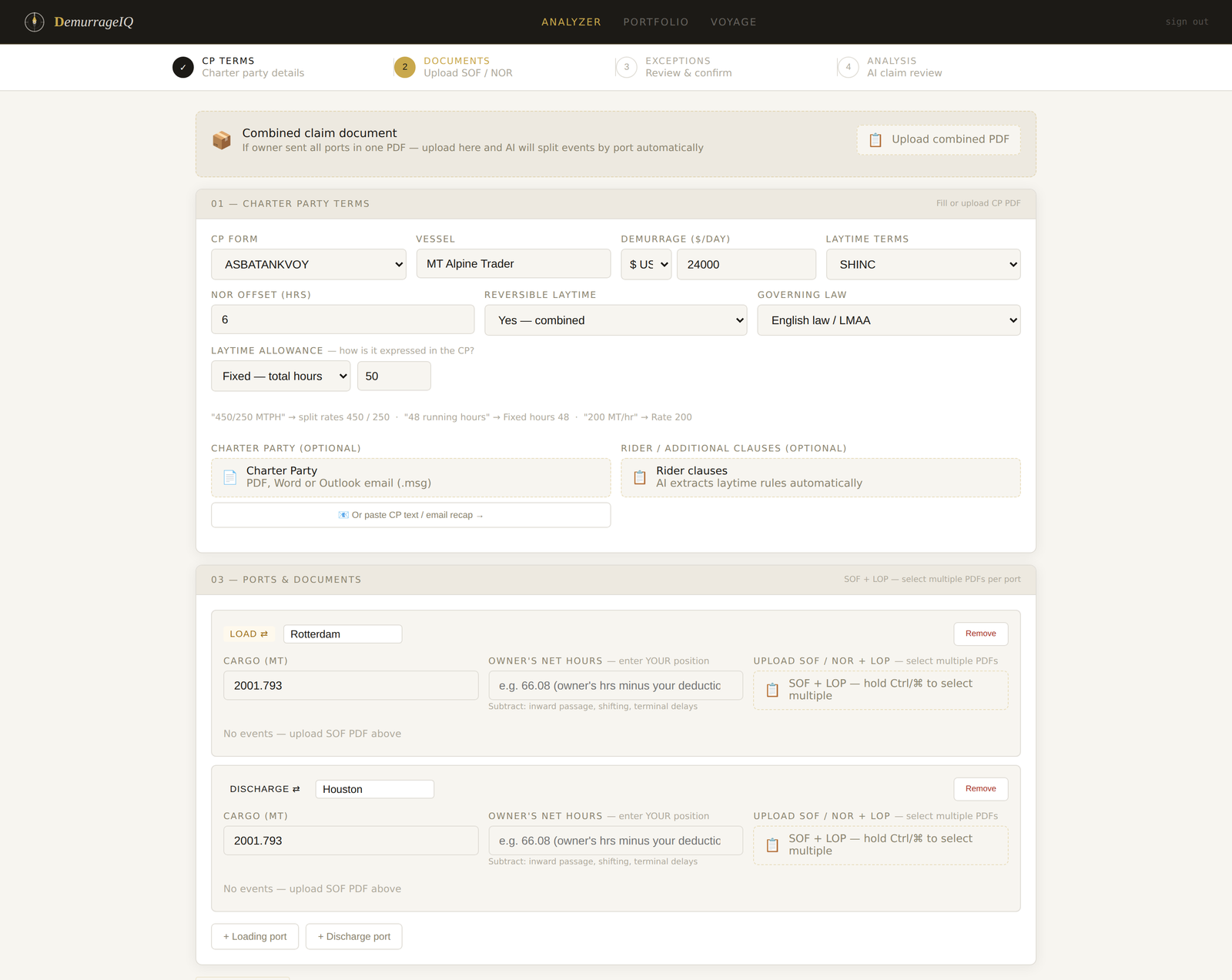
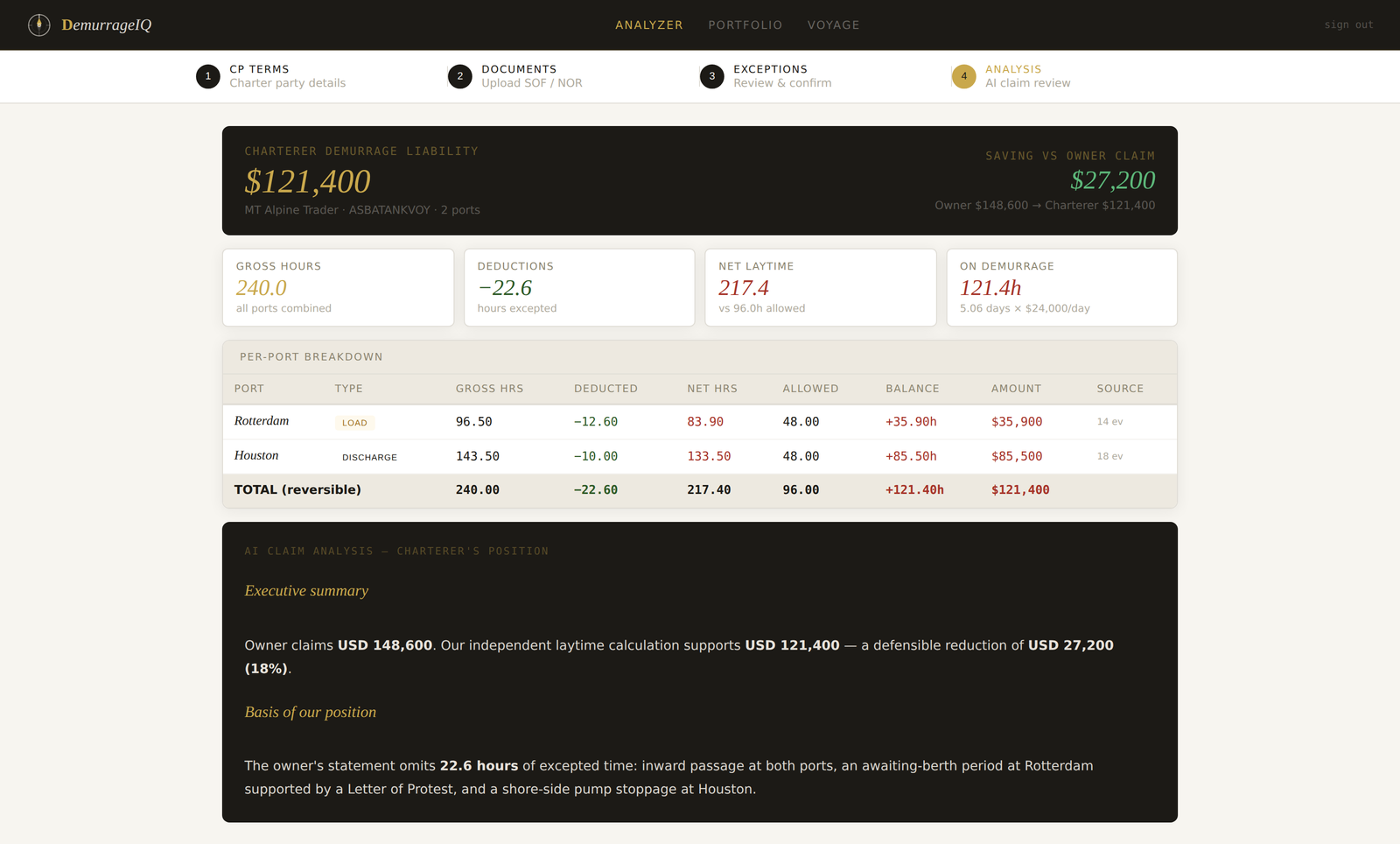
Real screens from the analyzer — the setup, and the position it produces.
Every figure below is from an actual demurrage claim analysed using DemurrageIQ on live chemical tanker voyages during 2025–2026.
Plain-English explainers on demurrage, laytime and charter-party terms.
Demurrage is the compensation a charterer pays the shipowner when a vessel is detained at the load or discharge port beyond the agreed laytime. The daily demurrage rate is set in the charter party.
Laytime is the time allowed to load or discharge cargo. It runs from a valid Notice of Readiness, plus any agreed offset, and is measured against the Statement of Facts, applying the charter party terms — fixed hours or a MT/hour rate, reversible or per port — less excepted periods such as weather, shifting or terminal delays.
Yes. DemurrageIQ reads scanned Statements of Facts, Notices of Readiness and Letters of Protest using AI vision OCR, typically in under a minute per document.
The charter party or fixture recap, the owner's laytime statement (optional), and the Statements of Facts, Notices of Readiness and Letters of Protest for each port.
Contested demurrage claims are commonly reduced by 20–40%, depending on the supporting documentation and the charter party terms.
Commodity tanker charterers, trading houses and brokers handling chemical, biofuel and clean petroleum product cargoes.
Every uncontested demurrage claim is money left on the table.
DemurrageIQ gives your trading desk the analytical firepower to challenge every claim.